Contact Rivierenwijk













Van vaag voornemen naar concreet actieplan
A goal like “getting fitter” is too broad. Effective goals are SMART: specific, measurable, achievable, realistic, and time-bound. But there is more. Research shows that goals stick better when they are linked to intrinsic motivation—what truly drives you.
Ask yourself not just what you want to achieve, but why. Do you want to get stronger to feel better, have more energy, or prevent injuries? Once that is clear, consistency naturally becomes more logical.
Focus op gedrag, niet op resultaat
The end goal is outside your direct control; behavior is not. Instead of “I want to lose five kilos,” it is better to think: “I will train three times a week and drink two liters of water daily.” This shift lowers the mental threshold and increases the chance of success.
Within COMMIT, we use this behavior-oriented approach in our coaching programs, such as I DO. It helps members shift their focus from outcome to action: exactly where change begins.
Maak gebruik van feedbackloops
The human brain responds strongly to feedback. Small successes activate the reward center, increasing the motivation to continue. Therefore, do not just measure big steps, but also micro-progress: more repetitions, a more stable posture, a better night’s sleep.
Use a training log, smartwatch, or a simple notebook. What you measure, you can improve.
Motivation grows through visible progress. Small successes, such as 2 extra push-ups, a more stable plank, or half a kilo more on your squats, give your brain a reward boost and make it easier to keep going.
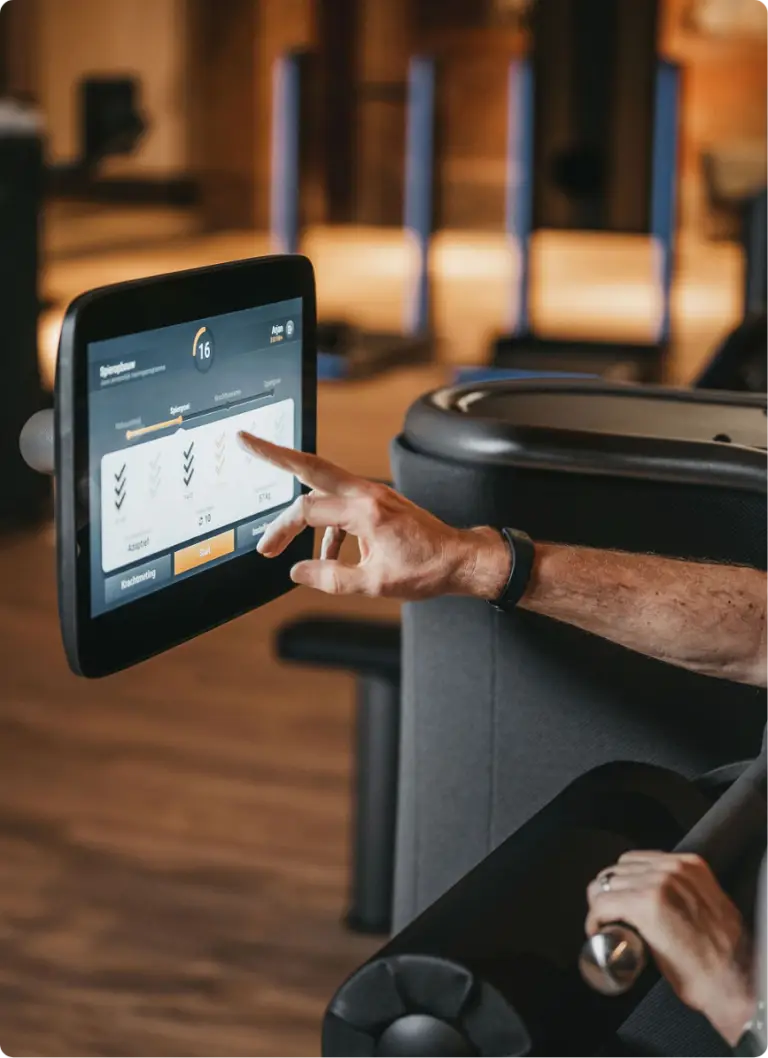
At COMMIT, we encourage members to track micro-progress: in a training log, via a smartwatch, or with our app. This way, you see not only the big steps but also the small victories that truly make the difference.
Herstel en rust zijn onderdeel van vooruitgang
Goals are often associated exclusively with action, but recovery is just as crucial. Without sufficient sleep and nutrition, the body responds with elevated cortisol levels, which actually hinders recovery, muscle growth, and fat burning.
Schedule rest periods as part of your strategy. They are not optional, but necessary. Pay sufficient attention to muscle recovery and mental relaxation as well. Read more about recovery in sports in this article or, of course, at our Recovery facilities.
Conclusie
Sustainable results start with realistic goals. By focusing on behavior, small measurement points, and recovery, your training becomes something you consistently do rather than something you “have to” do.
The new year is not about a new version of yourself, but about a better relationship with what your body needs.